The NLC has its roots in a small reforestation project launched in 1999 with five schools – Bukit View Secondary, Raffles Girls’ Secondary, Corporation Primary, Henry Park Primary, and the Singapore American School. In 2000, in partnership with National Parks (NParks) and the Public Utilities Board (PUB), Assistant Professor Shawn Lum, together with five teachers, conceived what is known today as the NLC.
SingTeach speaks to Shawn about the NLC.
SingTeach: What was the objective behind the NLC?
Shawn: To foster a better understanding of and an appreciation for the environment and our water resources, and also to get students from different age groups and schools to work together.
I really do think, based on experience and what I’ve read in the literature, that it’s really important to get students out there to do authentic, hands-on work. I mean, watching a video and actually doing something are two totally different things.
The other objective was how to then, through these activities, build up a database of knowledge so that students could build upon the work and information gathered by their predecessors. In that way, it was set up as a kind of a long-term research project; not so much about research on learning, but rather, research in environmental and ecological sciences.
SingTeach: It’s been 10 years since it all started. What impact has the NLC had?
Shawn: I suppose you’ll have to ask the students but some of them have gone on to study at great universities – Columbia, Stanford, and other fantastic places. Many of them did major in environmental science and have actually done a lot of good work, both as volunteers and professionally in environmental sciences.
We’ve had great buy-in from the NParks Board and the PUB. Of course I don’t think this happened just because of the NLC, but you can see how these two organizations – from being just managers of our environment and natural resources – have really changed into outreach organizations, in particular NParks: They have 2 full-time outreach officers now, and we’ve worked closely with them. I’d like to think that maybe some of that developed because of these nature camps.
The other thing was that we started out with 6 teachers and now there are about 10. We continue to work together, even 10 years later, voluntarily; it’s not mandated by anybody. It’s just out of sheer interest that we continue to work together and develop material. Hopefully it will result in a set of resources that will be available to any student or any teacher.
So there’ve been benefits not only for the students involved but also certainly for teachers and practitioners. There’s been a steady process of working together continuously. It’s quite inspiring for all of us to participate in something like this.

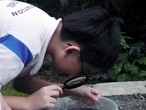 Members of the Natural Sciences and Science Education and Learning Sciences and Technologies academic groups at the National Institute of Education came together to study how students can build on their scientific knowledge. Assistant Professor Lee Yew Jin and Dr Jennifer Yeo tell us about their research project, Making Meaning of Environmental Science through Computer-supported Collaborative Learning.