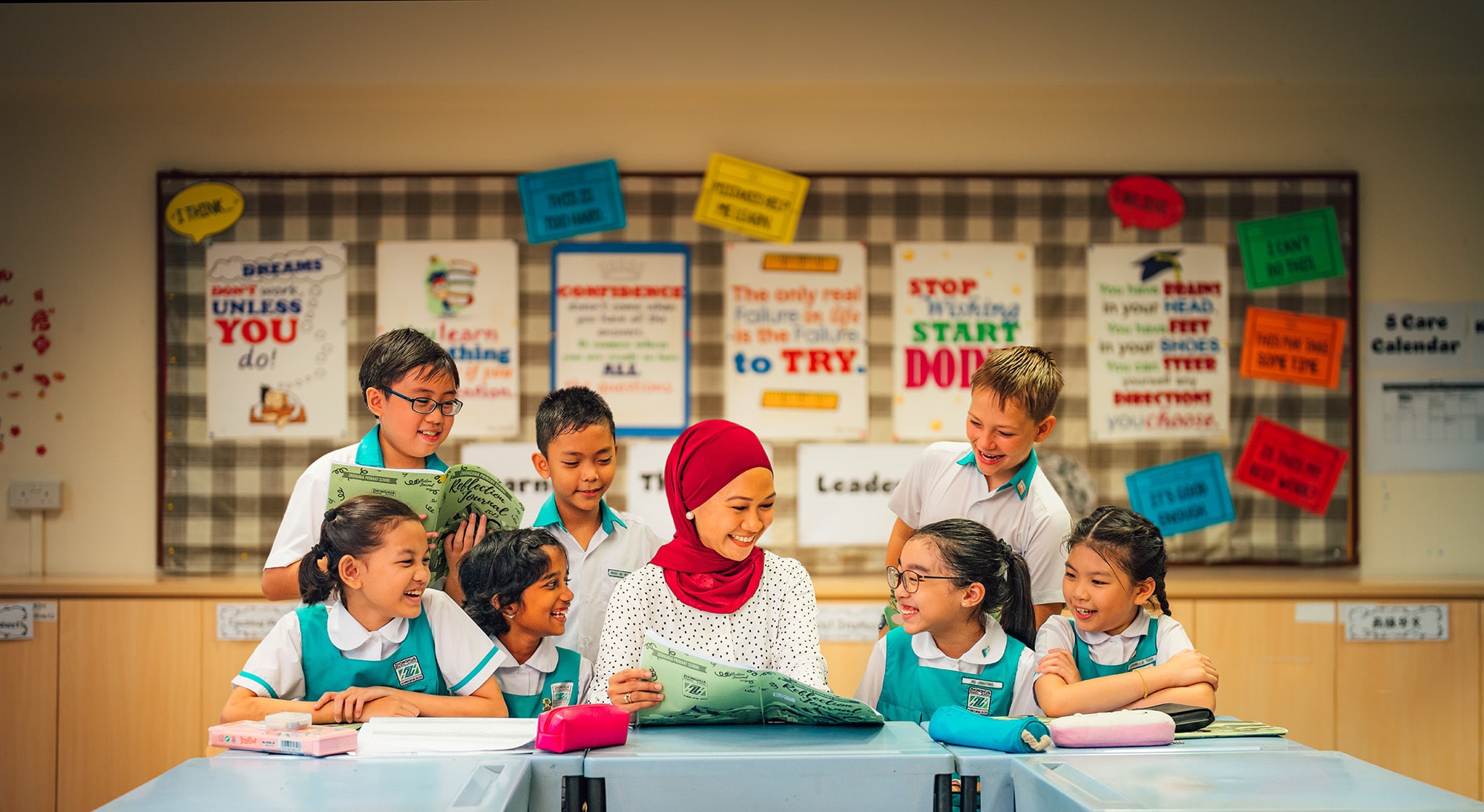
Learning is social – as they say, TEAM stands for Together Everyone Achieves More – and the KBDS reinforced how every child is valuable in negotiating, dialoguing and advancing each other’s thought processes and reasoning capabilities within a collaboration-driven, community-orientated learning environment. For example, students were able to make use of different modes and forms of thinking (such as divergent-convergent model, part-whole method and content-concept approach) facilitated by the KB scaffolds to spark, strengthen and synthesize ideas within and across groups. Indeed, as voiced by a student of mine, “One plus one is always more than two. Together, we progress more than what we can imagine.”
Learning is also emotional, where emotion affects and shapes our journey of learning and discovery. The KBDS saw numerous episodes of organic rotational leadership where students (of varying ages) each took the initiative to lead their respective group in capturing data, conceptualizing prototypes, connecting ideas, consolidating pointers and/or challenging assumptions to advance the group’s hypothesis and proposition via the use of KB Conversational Stems. Additionally, some of my students expressed how the presence of the multi-modal technological tools increased their consciousness towards their emotions and helped them realize that frustration could be productive and positive for their learning – with the help of cognitive flexibility and emotional intelligence, of course.
By emphasizing the social and emotional nature of learning, the KBDS has shown its potential in cultivating students who are able to confidently exercise their critical and creative dispositions within a collaborative community setting.
Melvin Chan
Senior Teacher, Teck Whye Secondary School