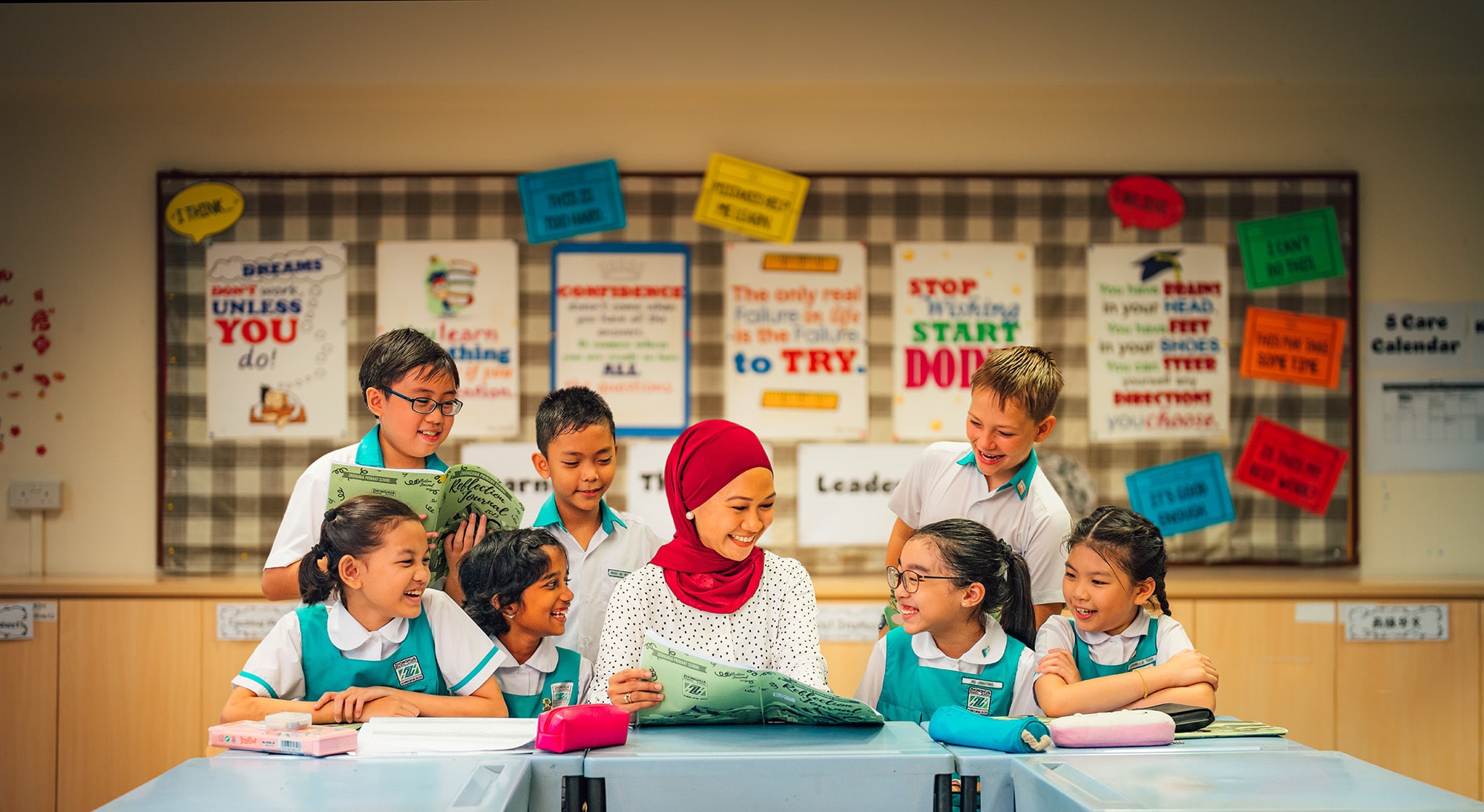
Ever wondered about how you can make science learning more interesting and engaging for your students? Find out more about the AR in Science Learning project.
 How findings from Augmented Reality in Science can help your students
Key Insights
- Students developed significant improvement in:
- Self-directed learning
- Creative thinking
- Pairing the augmented (AR) system with the Questioning, Investigating, Making, Synthesising (QIMS) model notably enhanced students’ critical thinking and knowledge creation.
- In the 2022 iteration, students’ academic performance in Science significantly improved after using AR and QIMS.
- Low progress students had the greatest benefit in their academic outcomes.
 Introduction to Augmented Reality in Science

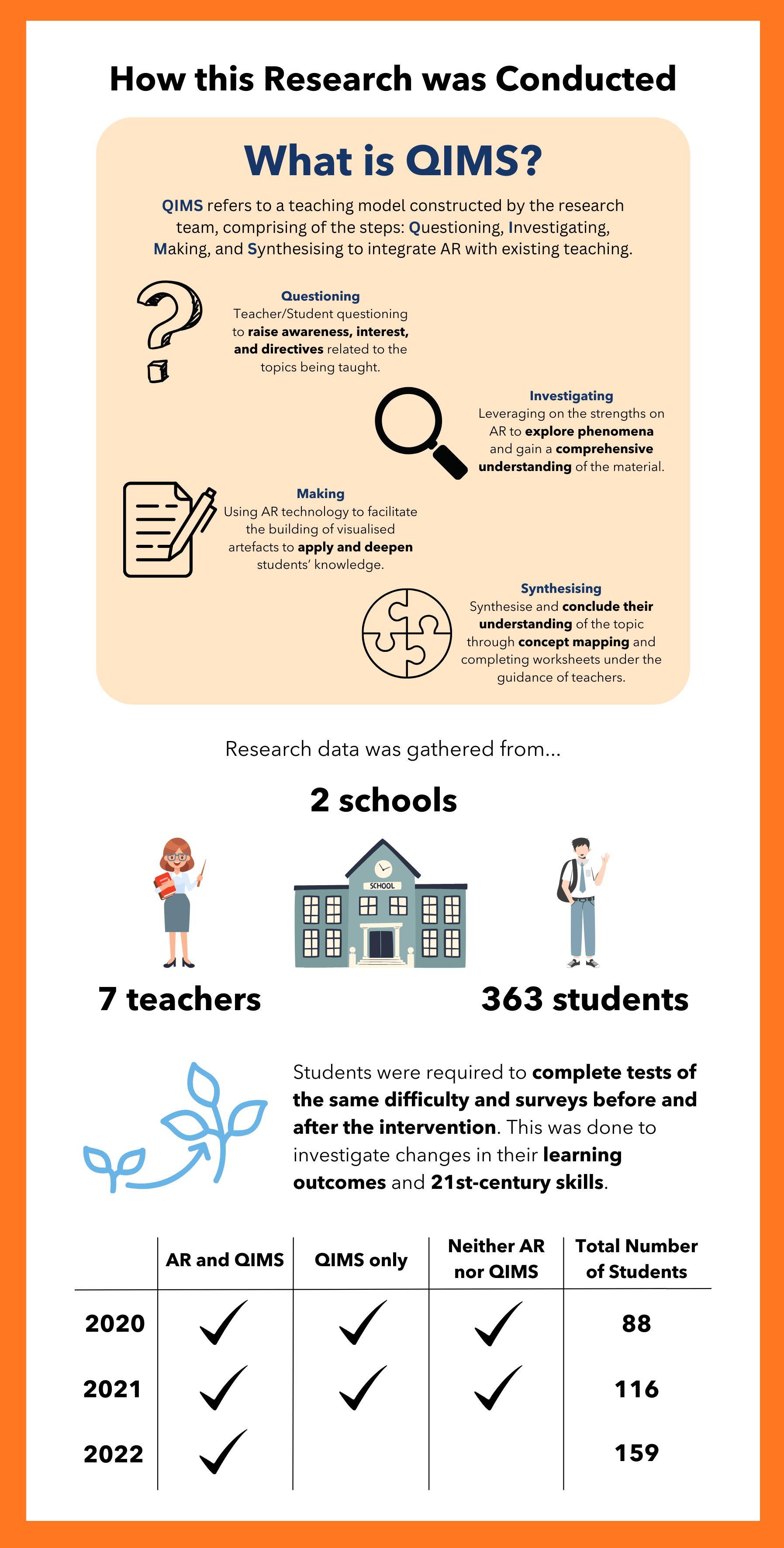
 Research Methodology
Research Findings
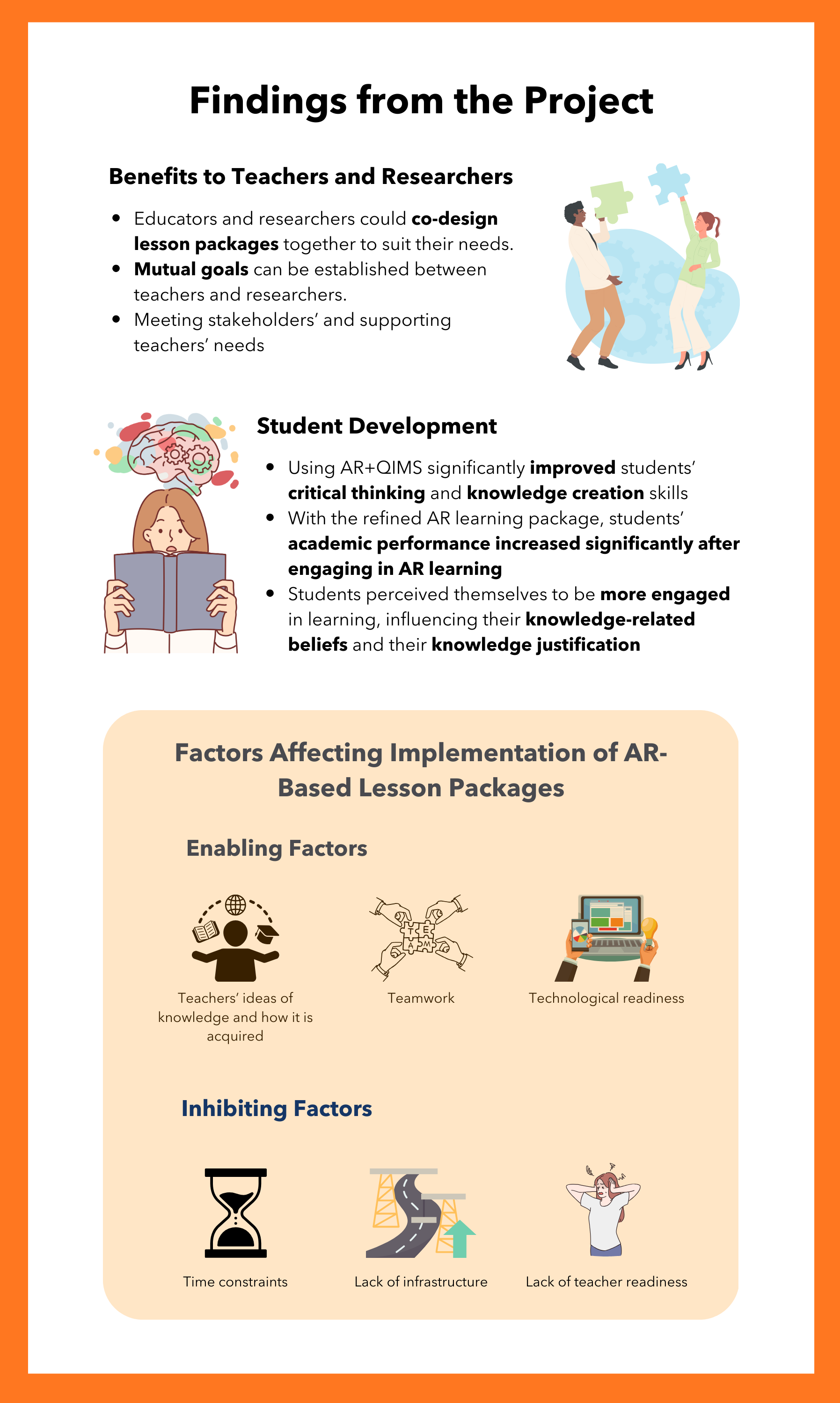
 What Does This Mean for Teaching and Learning?

 Related Links
Further Readings
For educators interested in the research methodology behind AR in Science Learning, you may refer to:
Research Project
- Leveraging on augmented reality technologies for Establishment of Science Trial: An exploratory study
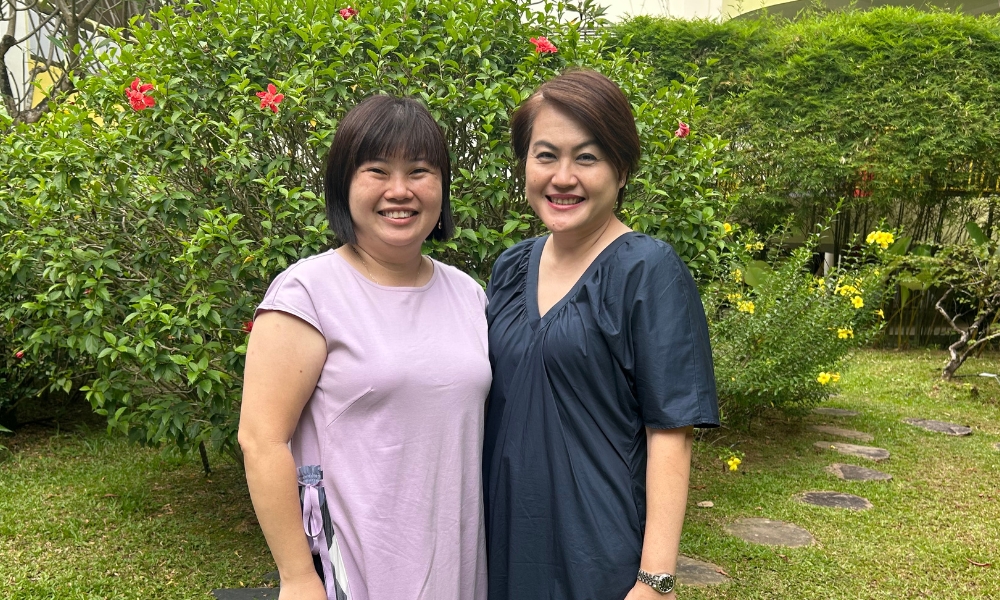
Research Team
To learn more about this research, please contact Dr Wen Yun at yun.wen@nie.edu.sg.
Principal Investigator
Research Assistant
- Ms He Sujin, LSA, NIE, NTU.
 Acknowledgements
AR in Science Learning was funded by the Education Research Funding Programme, National Institute of Education, Nanyang Technological University, Singapore (project no. OER 26/19 WLK). Any opinions, findings, and conclusions or recommendations expressed in this material are those of the author(s) and do not necessarily reflect the views of the Singapore MOE and NIE.
This knowledge resource was extracted and reconstructed from the published materials from the research team by Ms Shee Yi Xuan, Katherine with input from Dr Wen Yun and presented on 30 April 2024.